
UV-stable and quick to return to service
Polyaspartic Garage Floors in Naples, FL
A coating chemistry that stands up to sun through the open door and gets your garage back sooner.
- Free on-site estimate, with the floor measured in person
- Moisture readings taken on the slab before we coat
- Written quotes that spell out the surface prep
Why Polyaspartic Suits a Naples Garage
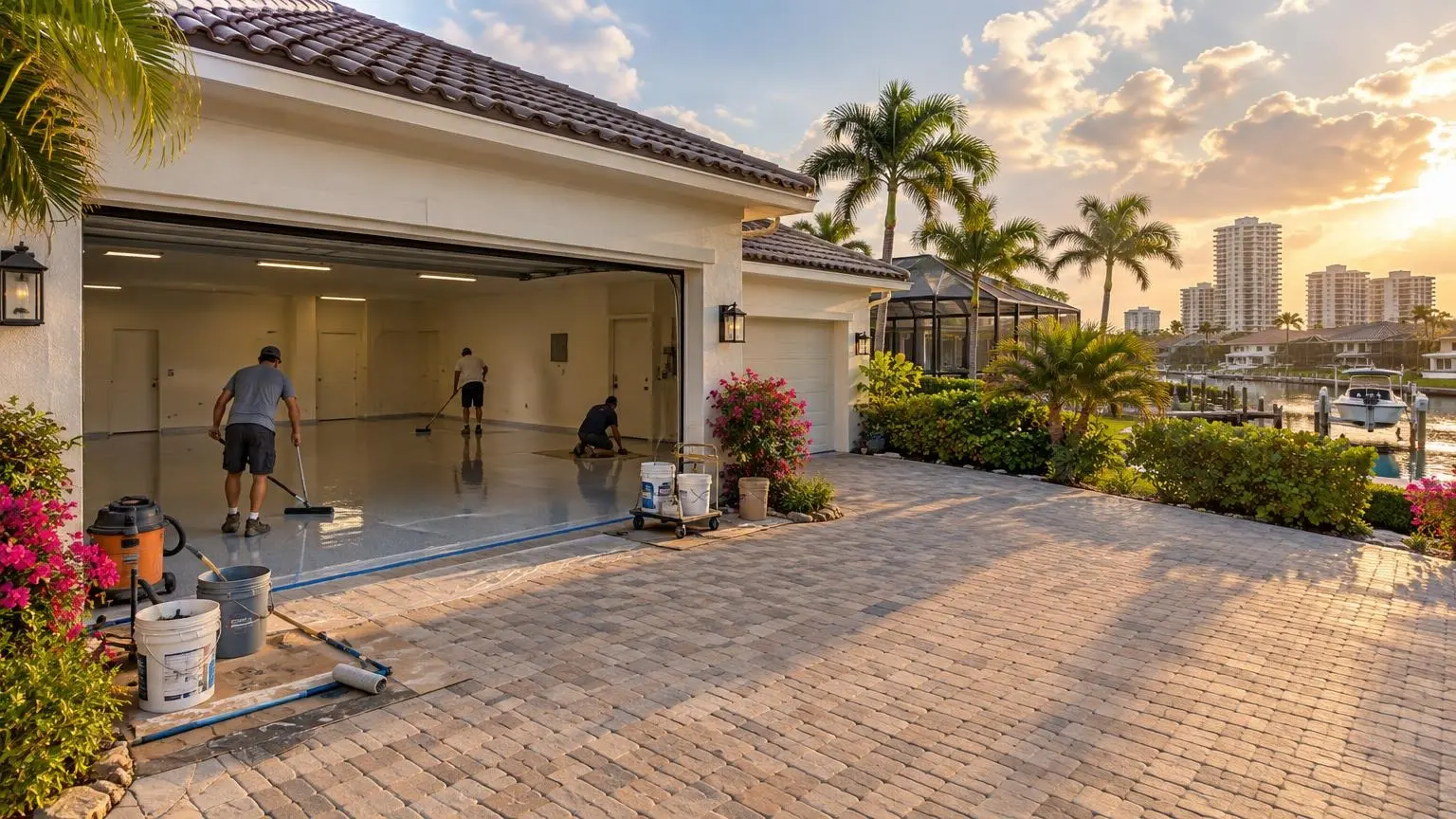
Polyaspartic garage floors have become a popular choice in Naples because they answer two local problems at once: strong sunlight and limited downtime. Chemically, polyaspartic floor coating is an aliphatic polyurea. Compared with epoxy, it cures much faster and keeps its color in sunlight far better. For a garage whose door stays open on bright afternoons, or a homeowner who needs the car back inside quickly, those traits matter.
Polyaspartic vs epoxy, by the numbers
Here is how HomeGuide's comparison stacks the two up:
- UV resistance: polyaspartic is rated excellent, standard epoxy poor to fair.
- Cure time: polyaspartic reaches full cure in about 1 to 2 days and is ready for heavy vehicles after about 24 to 48 hours. For epoxy, the full cure can stretch out to seven days.
- Coat thickness: each polyaspartic coat runs about 2 to 6 mils, each epoxy coat about 10 to 20 mils.
- Lifespan: HomeGuide lists polyaspartic at 10 to 20 or more years.
Bob Vila's guide lines up: polyaspartic takes foot traffic after about 3 to 4 hours and cars after about 24 hours, against about 12 hours and 3 days for epoxy.
Where each one fits
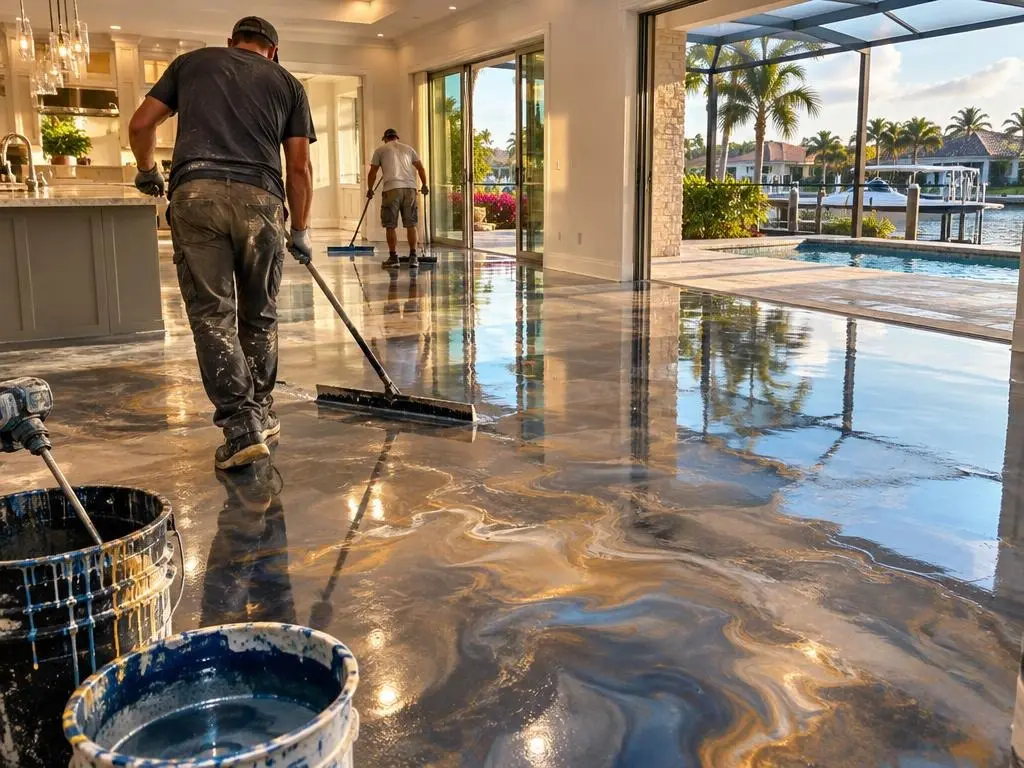
Thinner coats are not a weakness on their own, but they change how a system is built. Epoxy fills low spots and builds thickness quickly, while polyaspartic is harder and more UV stable on top. Many of our garage floors in Naples use both: an epoxy or polyaspartic base, a chip broadcast and a polyaspartic clear coat. A full polyaspartic system, base to top, makes the most sense for garages with heavy sun exposure, for owners who need the garage back quickly, and for lanais and other outdoor surfaces.
Fast cure means careful timing
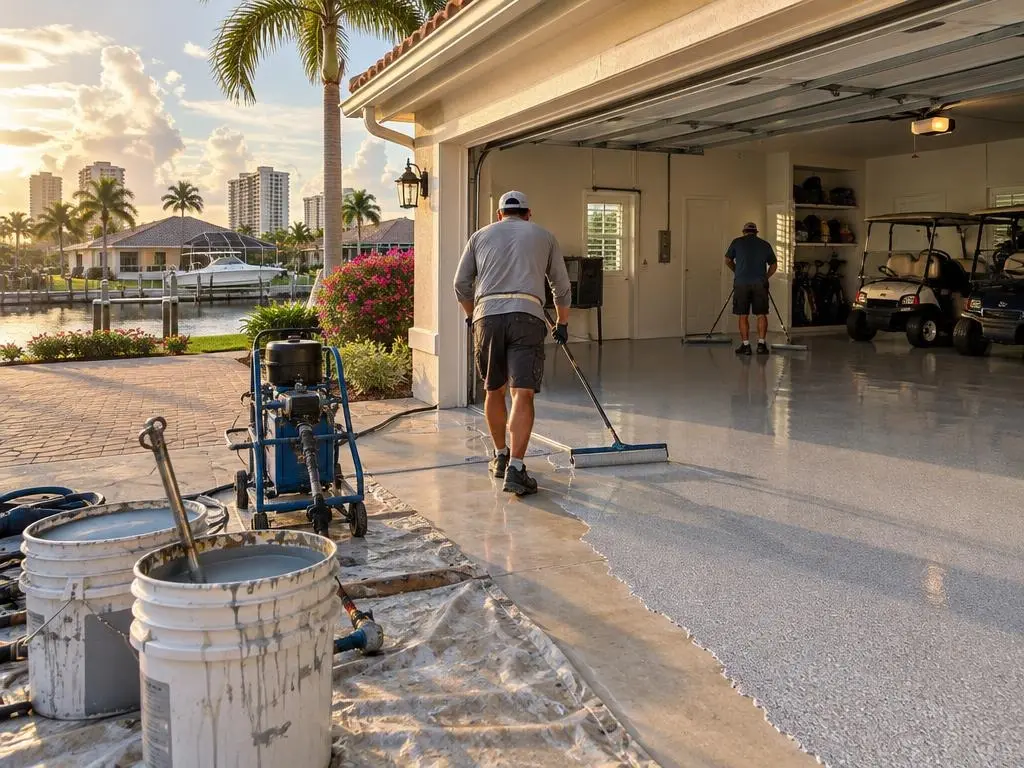
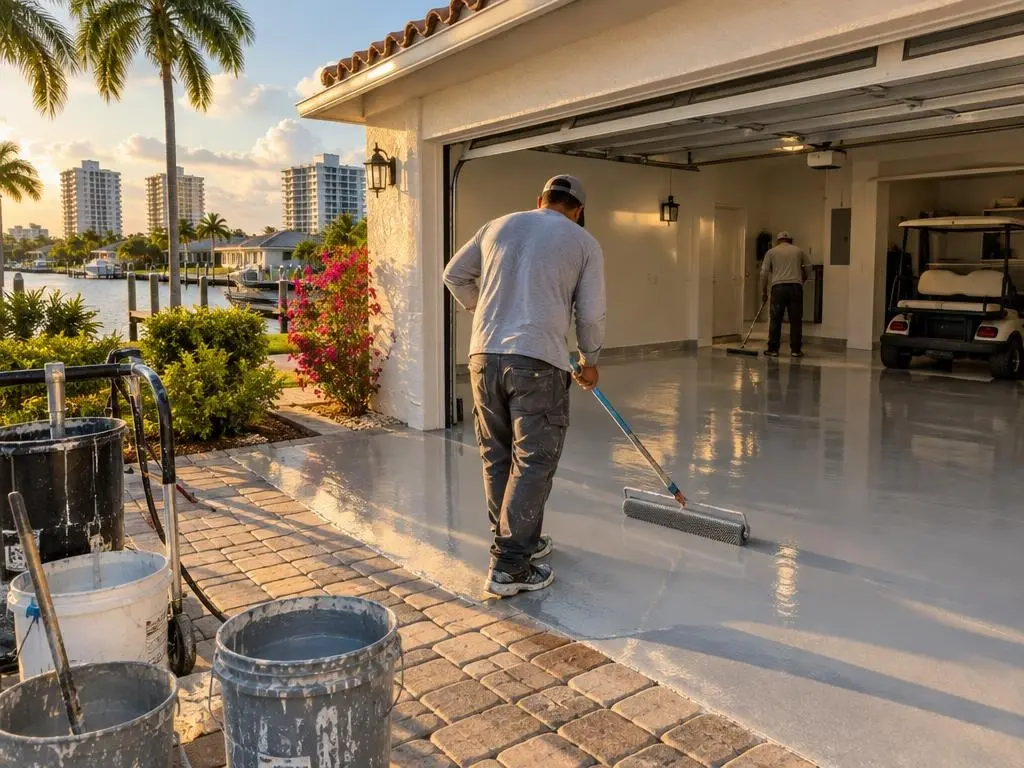
The same speed that makes polyaspartic convenient makes it unforgiving to install. It has a short working time, and in hot weather that window shrinks further. Bob Vila's guide says it is not a DIY product, and we agree. Our crew mixes in smaller batches, works the floor in planned sections and keeps an eye on slab temperature. In Naples summers we tend to begin in the early morning, before the slab heats up, and keep the garage door down while each coat sets.
Humidity and dew point
Polyaspartic chemistry reacts with moisture in the air, which is part of why it cures so quickly. Too much humidity, or a slab surface at or near the dew point, can cause bubbles, haze or a soft finish. Before each coat we measure air temperature, relative humidity and dew point and compare them with the concrete. If the readings are off, we wait. That patience costs a few hours. Skipping it can cost the floor.
Preparation still decides the result
A fast-curing coating will fail just as quickly as a slow one if it goes over a poorly prepared slab. With a median build year of 1983 for Naples homes, per Point2Homes' summary of Census survey data, many garages carry decades of paint, sealer and oil. Before coating, the full floor gets diamond ground, cracks and joints filled, oil spots degreased and the slab tested for moisture vapor. High vapor readings mean the first layer is a moisture-tolerant primer.
Good candidates for polyaspartic
- West- or south-facing garages that take afternoon sun
- Owners who need the garage back within a day or two
- Seasonal residents scheduling work around a short stay
- Garages with golf carts, where battery acid and tire scuffs are common
- Lanais, entryways and other surfaces that see daylight
- Small business spaces that can only close briefly; Bob Vila notes businesses may need to shut for a day or two
Seasonal residents and short stays
Point2Homes' summary of Census survey data shows that 48.0% of Naples housing units were unoccupied at the time of the count, which reflects how many owners live here only part of the year. For someone in town for a few weeks, a coating that takes a week to cure is a real problem. Polyaspartic usually lets us finish a garage and have it ready for the car within a day or two, so the work fits into a short visit. We can also run the estimate with a property manager present and email the written quote.
Care after install
Keep sand and grit off the floor with regular sweeping. Clean with water and a pH-neutral cleaner. Wipe up chemical spills promptly. Polyaspartic is hard and chemical resistant, but grit dragged under tires will still wear any surface over time.
Recoating an existing floor
If you already have a coated garage floor that is sound but dull or lightly scratched, a fresh polyaspartic topcoat may bring it back without a full grind. We check adhesion in several places first. If the original coating is lifting, peeling or yellowed through its thickness, a recoat will not fix it and the floor has to come back to concrete. We tell you which case applies before you commit.
Polyaspartic System Options
We build polyaspartic floors in several ways, depending on sun exposure, budget and look.
Full polyaspartic system
Polyaspartic base, broadcast and topcoat for the fastest return and most UV stability.
Epoxy base with polyaspartic top
Epoxy builds thickness underneath and polyaspartic protects the surface from sun.
Chip broadcast
Full or partial vinyl flake between the layers for texture and dirt hiding.
Solid color finish
A pigmented polyaspartic floor with optional anti-slip grit.
Clear recoat
A fresh polyaspartic topcoat over a sound older coating after light sanding.
Moisture-tolerant primer
Used under the system where slab readings show elevated vapor.
Typical Polyaspartic Floor Costs
| Job | Typical range | Source |
|---|---|---|
| Polyaspartic, per sq ft | $5 to $12 | HomeGuide |
| Polyaspartic, per sq ft | $4 to $9 | Bob Vila |
| One-car garage | $1,400 to $4,700 | HomeGuide |
| Two-car garage | $2,000 to $6,900 | HomeGuide |
| Three-car garage | $2,900 to $10,400 | HomeGuide |
| Typical project total | $1,440 to $3,240 | Bob Vila |
Two national guides with different ranges, shown as published. We set your price after testing and measuring the floor, and the written estimate is what you pay.
How a Polyaspartic Install Goes
1. Test and quote
We take moisture readings, measure the floor and recommend a full or hybrid system in writing.
2. Grind and patch
Diamond grinding, crack repair and a thorough vacuum.
3. Check the air
Air temperature, humidity and dew point measured against the slab before mixing.
4. Coat in sections
Base, broadcast and topcoat applied in planned sections within the product's working time.
5. Return to service
We give you foot and vehicle times based on the product and conditions.
Why Choose Us for Polyaspartic Garage Floors
We check the dew point first
Polyaspartic reacts to moisture in the air, so readings come before mixing.
Small batches, planned sections
Short working time means a planned layout, not a rush.
Hybrid or full system
We explain which build fits your sun exposure and schedule.
Polyaspartic Garage Floors Questions
Does polyaspartic beat epoxy in a Florida garage?
For sun exposure and fast return, yes. In HomeGuide's ratings polyaspartic is excellent against UV where epoxy is poor to fair, and it takes vehicle traffic after about 24 to 48 hours. Epoxy builds thickness faster, so many floors use an epoxy base under a polyaspartic topcoat.
How soon can I walk and park on polyaspartic?
Bob Vila's guide gives about 3 to 4 hours for foot traffic and about 24 hours for vehicles. HomeGuide's figure for heavy vehicles is 24 to 48 hours. Temperature and humidity on install day change the timing, and we give you specific times.
Can I install a polyaspartic floor coating myself?
It is not a good DIY product. It cures very quickly, so mixing, spreading and broadcasting have to happen in a tight window. Bob Vila's guide also advises against DIY.
Does humidity affect polyaspartic?
Yes. The chemistry reacts with moisture, and very humid air or a slab near the dew point can cause bubbling or haze. We measure conditions before each coat and wait when they are not right.
Polyaspartic Garage Floors Service Areas
- Epoxy Flooring in Naples, FL
- Epoxy Flooring in Pelican Bay, FL
- Epoxy Flooring in Vineyards, FL
- Epoxy Flooring in Golden Gate, FL
- Epoxy Flooring in Golden Gate Estates, FL
- Epoxy Flooring in Naples Park, FL
- Epoxy Flooring in Naples Manor, FL
- Epoxy Flooring in Lely, FL
- Epoxy Flooring in Lely Resort, FL
- Epoxy Flooring in East Naples, FL
- Epoxy Flooring in Verona Walk, FL
- Epoxy Flooring in Orangetree, FL
- Epoxy Flooring in Ave Maria, FL
- Epoxy Flooring in Immokalee, FL
- Epoxy Flooring in Marco Island, FL
- Epoxy Flooring in Pine Ridge, FL
- Epoxy Flooring in Island Walk, FL
- Epoxy Flooring in Goodland, FL
- Epoxy Flooring in Everglades City, FL
- Epoxy Flooring in Chokoloskee, FL
Get a Polyaspartic Garage Floors Estimate
Free estimates for polyaspartic garage floors in Naples and nearby communities.